
CROSBY ISLAND MARSH MITIGATION BANK
Crosby Island Marsh Mitigation Bank
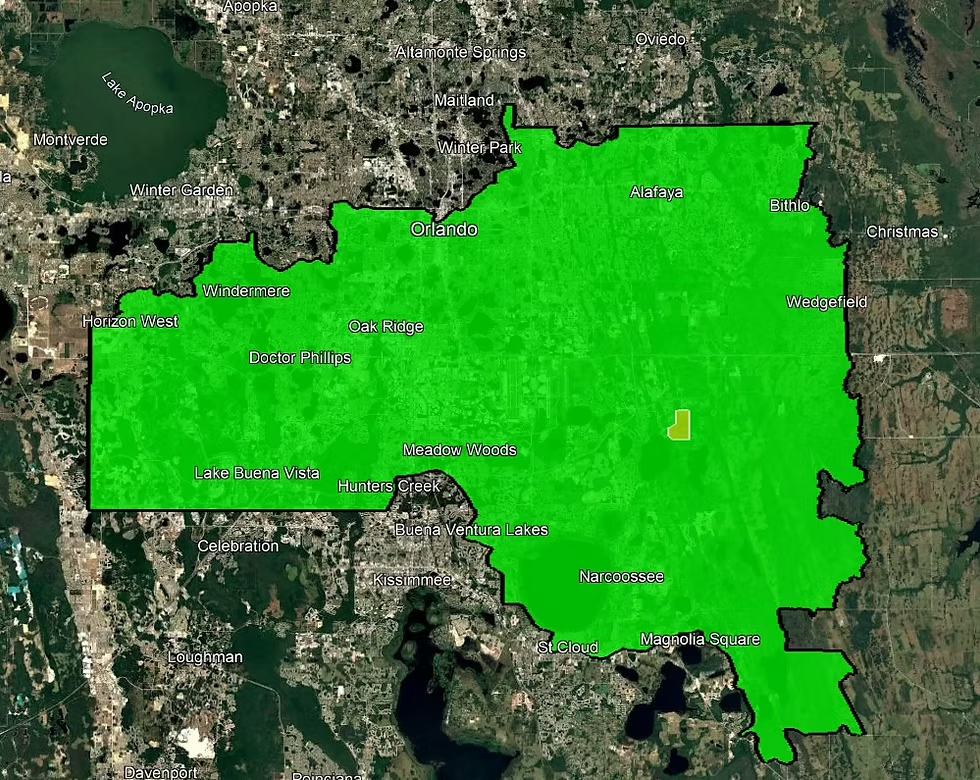
The Crosby Island Marsh Mitigation Bank (CIMB) is a 713.7-acre ecological restoration project located in Orange County, Florida. This is a federally approved mitigation bank, permitted by the U.S. Army Corps of Engineers (USACE) in 2008 using the WRAP (Wetland Rapid Assessment Procedure) methodology.
The bank provides compensatory mitigation within portions of the following watersheds: Reedy Creek, Shingle Creek, Boggy Creek, Econlockhatchee River, Lake Hart, East Lake Tohopekaliga, and Lake Myrtle, encompassing USACE Hydrologic Unit Codes (HUCs) 03090101 and 03080101.
Site History
Historically, the property was ditched and drained to support intensive agricultural operations. Over half of the site consisted of improved and wet-improved pasture used for cattle grazing and hay production. A network of large drainage canals and active pump stations altered the natural hydrology by diverting water away from the historic marshlands, effectively dewatering the system for agricultural use.
Restoration and Management
Through targeted restoration and adaptive management, CIMB has successfully reestablished functional wetland ecosystems that now support a diversity of wetland-dependent flora and fauna and provide enhanced hydrologic and ecological functions.
Key management activities include:
- Hydrologic Restoration: Filling and blocking historical drainage ditches and constructing an earthen berm along the southwest corner of the site to restore natural water levels and flow patterns.
- Vegetative Restoration:
Planting of wet improved pasture with transitional wetland tree species.
Planting of wet improved pasture with wetland tree species. - Upland Enhancement: Eradication of bahia grass, followed by native seeding and planting with appropriate herbaceous, shrub, and tree species to improve habitat diversity and connectivity.